

Have you ever met someone who speaks Spanish and not known how to introduce yourself correctly?
That nervous feeling when you have to say your name in Spanish for the first time, the uncertainty about whether to use “tú” or “usted”, or simply not remembering the basic phrases at the exact moment you need them. Knowing how to introduce yourself in Spanish correctly can make the difference between a memorable first impression and an awkward moment you’d rather forget.
What You Will Discover in This Article
In this complete guide you will learn how to introduce yourself in Spanish naturally and effectively in any situation. You’ll discover the 20 essential phrases native speakers use to introduce themselves, the correct pronunciation of each expression, and real examples you can use immediately. From basic Spanish greetings to formal and informal introductions, you’ll master the art of making a great first impression in Spanish.
This article will provide you with the practical tools you need to present yourself with confidence in Spanish today. Whether you are an absolute beginner or already have basic knowledge, here you will find phrases to introduce yourself organized by level of formality, with clear pronunciation and specific contexts in which to use them.
My Personal Experience: The Power of a Good Presentation
During my first days in Barcelona, I vividly remember the moment I met Daniel, while trying to introduce myself in Spanish, I mixed English and Spanish in a confusing way, ending with “Hi, me llamo…eh…I am…yo soy Anna”. Daniel smiled patiently and answered me in perfect Spanish, giving me the opportunity to try again.
That moment taught me that knowing how to properly introduce myself in Spanish is not just a matter of words; it is the key that opens doors to authentic connections and deeper conversations. Since then, I’ve seen how a well-crafted introduction can transform a chance encounter into a lasting friendship.
Basic Presentations: Your First Words in Spanish

Starting with the basics is always the best strategy when learning how to introduce yourself in Spanish. These are the three fundamental phrases you need to master before any others.
The Three Essential Basic Phrases
1. “Hola, me llamo [nombre]” – “Hello, my name is [name].”
Pronunciación:
Use: Universal, works in any context
Ejemplo: “Hola, me llamo Carlos” – “Hello, my name is Carlos.”
2. “Mucho gusto, soy [nombre]” – “Nice to meet you, I’m [name].”
Pronunciación:
Use: More formal, ideal for first impressions.
“Mucho gusto, soy María” – “Nice to meet you, I’m Maria.”
3. “Encantado/a de conocerte” – “Nice to meet you” 3.
Pronunciación:
Usage: Polite response after someone introduces himself/herself.
“Encantado de conocerte, Ana” – “Nice to meet you, Ana.”
However, mastering these basic phrases is only the first step toward more natural and fluent presentations.
Essential Greetings: The Perfect Front Door

Spanish greetings are the perfect framework for any presentation. Every moment of the day has its specific greeting, and using them correctly demonstrates your cultural knowledge of the language.
Greetings for Moment of the Day
Morning Greetings:
“Buenos días” – “Good Morning” (6:00 AM – 12:00 PM):
“Buenos días, me llamo Roberto” – “Good morning, my name is Roberto.”
Greetings from Tarde:
“Buenas tardes” – “Good Afternoon” (12:00 PM – 6:00 PM).
Ejemplo:”Buenas tardes, soy la doctora Martínez” – “Good afternoon, I am Dr. Martinez.”
Nocturnal Greetings:
“Buenas noches” – “Good night” (6:00 PM onwards).
Ejemplo: “Buenas noches, un placer conocerla” – “Good evening, nice to meet you.”
Universal Informal Greetings
“¡Hola!” – “Hello!” – The most versatile and friendly greeting.
“¿Qué tal?” – “How are you?” – Combination of greeting and casual question.
“¿Cómo estás?” – “How are you?” – Perfect for showing genuine interest.
Once you master these greetings, you can create the perfect atmosphere for any presentation.
Formal Presentations: For Professional Situations

Formal presentations require a specific level of courtesy and professionalism. These are the phrases to introduce yourself in work, academic or professional contexts.
Structure of a Formal Presentation
Step 1: Formal Greeting
“Buenos días, señor/señora [apellido]” – “Good morning, Mr./Ms. [last name].”
“Buenas tardes, estimado/a [nombre]” – “Good afternoon, dear [name].”
Step 2: Personal Presentation
“Mi nombre es [nombre completo]” – “My name is [full name]”
“Me llamo [nombre] y represento a [empresa/institución]” – “My name is [name] and I represent [company/institution].”
Step 3: Contextualization
“Soy [cargo] de [empresa]” – “I am [position] of [company].”
“Trabajo en el departamento de [área]” – “I work in the [area] department.”
Complete Examples of Formal Presentations
Ejemplo 1: Reunion de Negocio “Buenos días, señor Rodríguez. Mi nombre es Ana García y soy directora de marketing de TechSolutions. Estoy aquí para discutir la propuesta de colaboración que enviamos la semana pasada. Es un placer conocerle finalmente en persona.” ( Example 1: Business Meeting “Good morning, Mr. Rodriguez. My name is Ana Garcia and I am a marketing manager at TechSolutions. I am here to discuss the collaboration proposal we sent last week. It is a pleasure to finally meet you in person.”)
Ejemplo 2: Entrevista de Trabajo “Buenas tardes, estimada doctora Martínez. Me llamo Carlos Ruiz y soy el candidato para el puesto de ingeniero de software. Agradezco mucho esta oportunidad de conocerla y presentar mi perfil profesional.” (Example 2: Job Interview “Good afternoon, dear Dr. Martinez. My name is Carlos Ruiz and I am the candidate for the position of software engineer. I am very grateful for this opportunity to meet you and present my professional profile.”)
Mastering these structures will give you confidence in any professional environment.
Informal Presentations: With Friends and Acquaintances

Informal presentations allow for more spontaneity and warmth. Here you can relax and show your personality in a more natural way.
Characteristics of Informal Presentations
Relaxed Greetings:
“¡Hola!” – “Hello!” – Simple and effective
“¿Qué tal?” – “How are you?” – Greeting + casual question
“¿Cómo estás?” – “How are you?” – Shows personal interest
Casual Presentations:
“Soy [nombre]” – I’m [name] – Direct and friendly
“Me llamo [nombre]” – “My name is [name]” – Classic and natural
“Yo soy [nombre], ¿y tú?” – “I am [name], and you?” – Immediate reciprocity.
Natural Continuation:
“¿De dónde eres?” – “Where are you from?” – Common and natural question
“¿Qué haces?” – “What are you doing?” – Interest in your life
“¿Cómo conoces a [persona mutua]?” – “How do you know [mutual person]?” – Social context
Real Informal Dialogues
Situation: Birthday Party
A: “¡Hola! Soy Pedro, ¿y tú?” – “Hi! I’m Pedro, and you?”
B: “¡Hola Pedro! Yo soy Carmen. ¿Conoces a Laura hace mucho?” – “Hi Pedro, I’m Carmen, have you known Laura for a long time?”
A: “Sí, somos compañeros de trabajo. ¿Y tú?” – “Yes, we’re co-workers, are you?”
B: “Somos amigas desde la universidad. ¡Qué pequeño es el mundo!” – “We’ve been friends since college – what a small world!”
Location: Café con Amigos
A: “¿Qué tal? Soy Miguel.” – “How are you? I’m Miguel.”
B: “¡Hola Miguel! Carmen. Ana me ha hablado mucho de ti.” – “Hi Miguel! Carmen. Ana has told me a lot about you.”
A: “¡Ah, sí! Tú eres la diseñadora. Ana siempre habla de tu trabajo.” – “Ah, yes, you’re the designer. Ana always talks about your work.”
The key is to be genuine and show real interest in the other person.
Group Presentations: When There Are Several People

Group presentations require specific strategies to ensure that everyone feels included and the conversation flows naturally.
Group Strategies
Presentation to Multiple Persons:
“Hola a todos, soy [nombre]” – “Hello everyone, I’m [name].”
“Buenas tardes, me llamo [nombre]” – “Good afternoon, my name is [name].”
“¡Hola! Soy [nombre], encantado/a de conocerlos” – “Hi! I’m [name], nice to meet you.”
Introducing Others:
“Les presento a [nombre]” – “May I introduce [name]”
“Quiero que conozcan a [nombre]” – “I want them to meet [name].”
“Esta es [nombre], mi [relación] – “This is [name], my [relationship].
Example of Group Presentation
Situation: Teeting of Work Teams
Leader: Líder: “Equipo, quiero presentarles a nuestra nueva compañera, Elena Ruiz.” – “Team, I would like to introduce you to our new colleague, Elena Ruiz.”
Elena: : “¡Hola a todos! Soy Elena, vengo del departamento de finanzas de Madrid. Estoy muy emocionada de trabajar con ustedes.” – “Hello everyone! I’m Elena, I’m coming from the finance department in Madrid. I’m very excited to work with you.”
Group: Grupo: “¡Bienvenida Elena!” / “Mucho gusto!” / “¡Hola Elena!” – “Welcome Elena!” / “Mucho gusto!” / “Hola Elena!”
Group dynamics require positive energy and a willingness to connect with multiple people simultaneously.
Talking about your origin: Where you are from

Sharing your geographic origin is one of the most natural ways to continue a presentation and generate interesting connections.
Ways to Express your Origin
Basic:
“Soy de [ciudad/país]” – Ejemplo: Soy de Barcelona. – “I am from [city/country].” – Example: I am from Barcelona. Simple and direct
“Vengo de [lugar]” – Ejemplo: Vengo de Italia. – “I come from [place]” – Example: I come from Italy. Indicates movement
“Nací en [lugar]” – Ejemplo: Nací en Málaga. – “I was born in [place]” – Example: I was born in Málaga. Specify the place of birth
More Detailed:
“Soy [nacionalidad], de [ciudad específica]” Ejemplo: Soy Alemán, de Berlín – “I am [nationality], from [specific city].” Example: I am German, from Berlin – Complete
“Nací en [lugar] pero crecí en [lugar]” -Ejemplo: Nací en Berlín pero crecí en Sevilla. – I was born in [place] but grew up in [place].” -Example: I was born in Berlin but grew up in Seville. Personal history
“Soy originario/a de [lugar]” -Ejemplo: Soy originario de Argentina . – “I am originally from [place].” -Example: I am originally from Argentina. Formal and precise
With Current Context:
“Soy de [lugar] pero ahora vivo en [lugar actual]” – Ejemplo: Soy de Roma pero ahora vivo en Madrid – “I am from [place] but now I live in [current place].” – Example: I am from Rome but now I live in Madrid. Present situation
“Vengo de [lugar] y llevo [tiempo] viviendo aquí” -Ejemplo: Vengo de Italia y llevo 8 años viviendo aquí. – – “I come from [place] and have been living here for [time]” -Example: I come from Italy and have been living here for 8 years. – Length of residence
“Actualmente resido en [lugar] pero soy de [lugar de origen]” -Ejemplo: Actualmente resido en Londres pero soy español. – “I currently reside in [place] but I am from [place of origin].” -Example: I currently reside in London but I am Spanish. – Very formal
Examples with Variations
Example 1: International Student
“Hola, soy Kenji. Soy japonés, de Tokio, pero vine aquí a estudiar arquitectura. Llevo seis meses en Madrid y me encanta la ciudad.” – “Hi, I’m Kenji. I’m Japanese, from Tokyo, but I came here to study architecture. I’ve been in Madrid for six months now and I love the city.”
Example 2: Professional who moved
“Mucho gusto, soy Patricia. Soy de Buenos Aires, Argentina, pero me mudé aquí hace dos años por trabajo. Aún estoy adaptándome, pero Barcelona es increíble.” – “Nice to meet you, I’m Patricia. I’m from Buenos Aires, Argentina, but I moved here two years ago for work. I’m still adjusting, but Barcelona is amazing.”
Talking about your background always generates interesting questions and opportunities for conversation.
Your Occupation or Profession: What You Do

Sharing your profession is a great way to give context to your presentation and find common ground with others.
Ways to Present your Profession
Direct:
“Soy [profesión]” -Ejemplo: Soy profesor. – “I am [profession].” -Example: I am a teacher. – Simple and clear
“Trabajo como [profesión]” -Ejemplo: Trabajo como profesor. – “I work as [profession].” -Example: I work as a teacher. – Describe your activity
“Me dedico a [área]” -Ejemplo: Me dedico a la educación – “I am engaged in [area].” -Example: I am engaged in education – Broader
With Details:
“Soy ( profesión) en (empresa/onstitución) Ejemplo: Soy profesor en una escuela secundaria – I am [profession] in [company/institution].” -Example: I am a teacher in a secondary school – Include place of work
“Trabajo en [área] para [empresa]” -Ejemplo: Trabajo en la educación para el gobierno. — “I work in [area] for [company].” -Example: I work in education for the government.– Contextualize your role
“Me especializo en [área específica]” – Mi especialización es Matematica. – “I specialize in [specific area].” – My specialization is Mathematics. Show expertise
For Students:
“Estudio [carrera]” -Estudio ingeniería – “I study [career].” –I study engineering Present continuous
“Soy estudiante de [carrera]” Soy estudiante de ingeniería . – “I am a [career] student.” I am a student of engineering .Student identity
“Estoy en [año/semestre] de [carrera]” – Estoy en el segundo año de carrera. – “I’m in [year/semester] of [degree].” – I am in the second year of my career. Specify the level
Professional Examples
Example 1: Established Professional
“Hola, soy Dr. Martínez. Soy cardiólogo en el Hospital General y también doy clases en la Universidad de Medicina.” (“Hi, I’m Dr. Martinez. I’m a cardiologist at the General Hospital and I also teach at the University of Medicine.”)
Ejemplo 2: Estudiante Avanzado “Mucho gusto, soy Carmen. Estoy terminando mi master en psicología clínica y hago prácticas en el centro de salud mental.” (Example 2: Advanced Student “Nice to meet you, I’m Carmen. I’m finishing my master’s degree in clinical psychology and I’m interning at the mental health center.”)
Presenting your profession with pride and clarity always makes a good impression.
Age and Personal Information: How Much to Share

Deciding how much personal information to share in a presentation depends on context and culture. In Spanish, there is flexibility depending on the situation.
Basic Information You Can Share
Edad (Opcional): – Age (Optional):
“Tengo [número] años” – “I’m [number] years old” – Direct.
“Soy de la generación de los [década]” – “I’m from the generation of the [decade].” – Indirect
“Estoy en mis [veintes/treintas/etc.]” – “I’m in my [twenties/thirties/etc.]” – Approximate
Marital Status (Contextual):
“Soy soltero/a” – Single
“Estoy casado/a” – Married
“Tengo pareja” – In a relationship
Familia – Family (if relevant):
“Tengo [número] hijos” – “I have [number] children” – Children
“Soy padre/madre de [número] niños” – “I am a parent of [number of] children” – Parenting identity
“Mi familia es de [lugar]” – “My family is from [place]” – Family origin
Example by Context
Professional Context:
“Buenos días, soy Ana López, ingeniera de software en TechCorp. Tengo cinco años de experiencia en desarrollo web.” – “Good morning, I’m Ana Lopez, software engineer at TechCorp. I have five years of experience in web development.”
Social Context:
“¡Hola! Soy Ana, soy de Valencia pero vivo aquí desde hace dos años. Trabajo en tecnología pero en mi tiempo libre me encanta la fotografía.” – “Hi! I’m Ana, I’m from Valencia but I’ve been living here for two years. I work in technology but in my free time I love photography.”
Personal Context:
“Hola, soy Ana. Tengo 28 años, soy de Valencia y tengo una hermana gemela. Trabajo como ingeniera pero mi pasión es viajar y conocer culturas nuevas.” – “Hi, I’m Ana. I’m 28 years old, I’m from Valencia and I have a twin sister. I work as an engineer but my passion is traveling and getting to know new cultures.”
The key is to read the context and adapt your personal level of openness.
Correct Pronunciation: Sounds Like A Native

Correct pronunciation is essential for your presentation to be understood and make a good impression. Here are the keys to sound natural.
Basic Pronunciation Exercises
Practice these phrases 10 times:
“Hola, me llamo María”
“Mucho gusto, soy Carlos”
“Encantada de conocerte”
“¿Cómo te llamas?”
“Soy de México”
Constant practice will improve your pronunciation significantly.
Practice with Dialogues: Real Situations

The best way to consolidate your learning is to practice with realistic dialogues that you will encounter in everyday situations.
Dialog 1: First Spanish Class
Profesor: “Buenos días, class. Hoy vamos a practicar presentaciones. ¿Quién quiere empezar?” (Teacher: “Good morning, class. Today we are going to practice presentations, who wants to start?”)
Student A: “Hola, me llamo Jessica. Soy de Estados Unidos y estoy aquí para mejorar mi español.” ( “Hi, my name is Jessica. I’m from the United States and I’m here to improve my Spanish.”)
Teacher: “Muy bien, Jessica. ¿Qué más puedes contarnos?” (“Okay, Jessica, what else can you tell us?”)
Jessica: “Trabajo como enfermera en un hospital. Muchos de mis pacientes hablan español y quiero comunicarme mejor con ellos.” – “I work as a nurse in a hospital. Many of my patients speak Spanish and I want to communicate better with them.”
Profesor: “Excelente motivación. ¿Y tú?” – “Excellent motivation. And you?” – (addressing another student).
Estudiante B: “Mucho gusto, soy Hiroshi. Soy de Japón y estudio ingeniería aquí en Madrid.” – “Nice to meet you, I’m Hiroshi. I’m from Japan and I study engineering here in Madrid.”

Dialogue 2: Professional Networking
Organizador: “Señoras y señores, es momento de networking. ¡Preséntense!” – Organizer: “Ladies and gentlemen, it’s time for networking – introduce yourselves!”
Persona A: “Buenas tardes, soy Carmen Rodríguez, directora de marketing digital en Innovate Corp.” — Person A: “Good afternoon, I’m Carmen Rodriguez, digital marketing manager at Innovate Corp.”
Persona B: “Mucho gusto, Carmen. Soy Miguel Santos, trabajo en desarrollo de software para startups.” – Person B: “Nice to meet you, Carmen. I’m Miguel Santos, I work in software development for startups.”
Carmen: “¡Qué interesante! Siempre estamos buscando socios tecnológicos. ¿En qué tipo de proyectos te especializas?” – Carmen: “How interesting! We’re always looking for technology partners – what kind of projects do you specialize in?”
Miguel: “Principalmente en aplicaciones móviles y plataformas web. ¿Su empresa necesita desarrollo interno?” – Miguel: “Mainly in mobile applications and web platforms. Does your company need in-house development?”
Carmen: “Sí, justo estamos evaluando modernizar nuestra plataforma. ¿Podríamos hablar después del evento?” – Carmen: “Yes, we are just evaluating upgrading our platform, could we talk after the event?”

Dialog 3: Birthday Party
Anfitriona: “¡Hola! Gracias por venir. Soy Laura, la cumpleañera.” – “Hi! Thank you for coming. I’m Laura, the birthday girl.”
Invitado: “¡Hola Laura! Feliz cumpleaños. Soy David, compañero de trabajo de tu hermano Carlos.” – Guest: “Hi Laura, happy birthday. I’m David, co-worker of your brother Carlos.”
Laura:Laura: “¡Ah, sí! Carlos me ha hablado mucho de ti. ¿Trabajas en la misma área que él?” – “Ah, yes! Carlos has told me a lot about you, do you work in the same area as him?”
David: “Sí, estamos en el departamento de finanzas. Él siempre habla de lo orgulloso que está de ti.” – David: “Yes, we’re in the finance department. He always talks about how proud he is of you.”
Laura:Laura: “¡Qué dulce! Ven, te presento a algunos amigos. ¡Todos, quiero que conozcan a David!” — “How sweet! Come, let me introduce you to some friends – everyone, I want you to meet David!”
Grupo: “¡Hola David!” / “Mucho gusto!” / “¡Bienvenido!” – Group: “Hello David!” / “Nice to meet you!” / “Welcome!”

Dialog 4: Gymnasium or Sports Club
Instructor: “¡Bienvenidos a la clase de yoga! Veo algunas caras nuevas. ¿Quieren presentarse?” – Instructor: “Welcome to the yoga class! I see some new faces, would you like to introduce yourselves?”
Participante A: “Hola, soy Elena. Es mi primera clase de yoga. Estoy un poco nerviosa.” – “Hi, I’m Elena. It’s my first yoga class. I’m a little nervous.”
Instructor: “No te preocupes, Elena. Aquí todos empezamos desde cero. ¿Y tú?” – Instructor: “Don’t worry, Elena. We’re all starting from scratch here – how about you?”
Participante B: “Soy Roberto. Practico yoga hace un año, pero es mi primera vez en este estudio.” – Participant B: “I am Roberto. I’ve been practicing yoga for a year, but this is my first time in this studio.”
Elena: “¡Qué bueno! Tal vez puedas darme algunos consejos después de la clase.” – Elena: “That’s great! Maybe you can give me some tips after class.”
Roberto:”¡Por supuesto! Me encanta ayudar a principiantes.” – “Of course! I love to help beginners.”
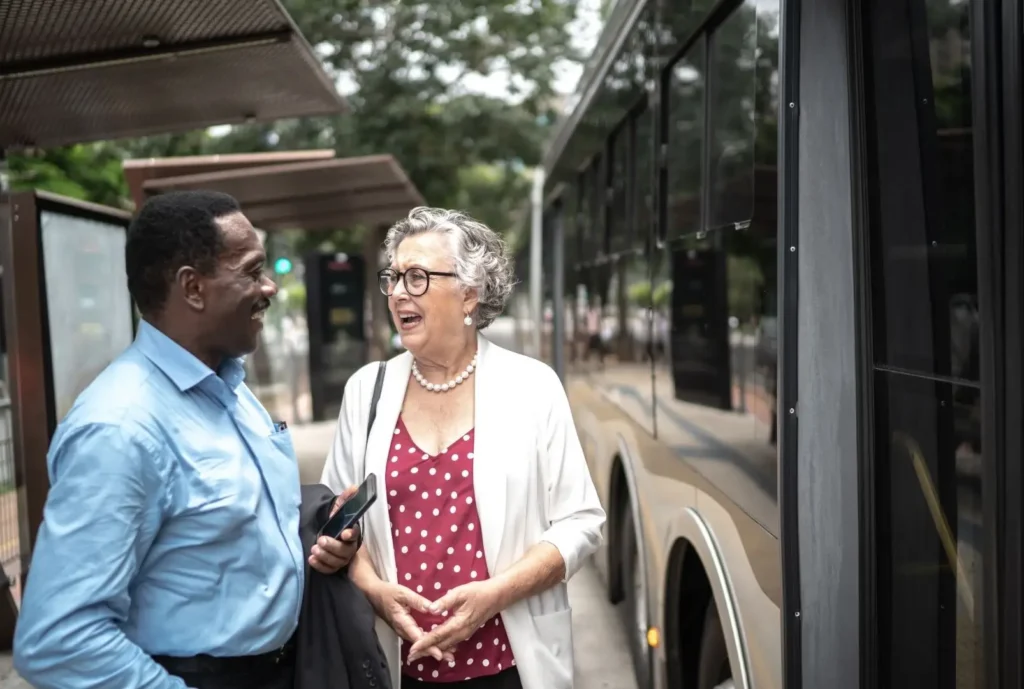
Dialogue 5: Public Transportation
Passenger A: Pasajero A: “Disculpe, ¿este autobús va al centro?” – “Excuse me, does this bus go downtown?”
Passenger B:Pasajero B: “Sí, exactamente. Yo también voy para allá. Soy Patricia, por cierto.” – “Yes, exactly. I’m on my way there too. I’m Patricia, by the way.”
Pasajero A: “Mucho gusto, Patricia. Soy Carlo . Soy turista y aún me estoy orientando.” – Passenger A: “Nice to meet you, Patricia. I’m Carlo . I’m a tourist and I’m still getting my bearings.”
Patricia:”¡Qué bien! ¿De dónde eres?” – “How nice, where are you from?”
Thomas: Thomas: “Soy de Francia. Vine a Madrid por trabajo, pero aprovecho para conocer la ciudad.” – “I’m from France. I came to Madrid for work, but I take the opportunity to get to know the city.”
Patricia: “¡Perfecto! Si necesitas recomendaciones, soy de aquí. ¿Cuánto tiempo te quedas?” – “Perfect! If you need recommendations, I’m local, how long are you staying?”
These dialogues will help you practice presentations in real and natural contexts.

20 Essential Phrases to Memorize
Here are the 20 essential phrases to introduce yourself that every Spanish student should master, organized by level of importance.
Basic Level (Phrases 1-7)
1. "Hola, me llamo [nombre]" - "Hello, my name is [name]."
Use: Universal, always first choice
Pronunciation:
2. "Mucho gusto". - "Nice to meet you"
Usage: Polite response when introduced
Pronunciation
3. ¿Cómo te llamas? - What is your name?
To ask someone’s name
Pronunciation
4."Soy + [nombre]" - "I am + [name]"
Use: Modern and direct alternative
Pronunciation
5. "Encantado de conocerte" - "Nice to meet you".
Usage: Expression of courtesy after presentation
Pronunciation
6. "¿De dónde eres?" - "Where are you from?"
Usage: Natural question in presentation
7. "Soy de + [lugar]" - "I am from + [place]."
Usage: To answer about your origin
Pronunciation
Intermediate Level (Phrases 8-14)
8. "¿A qué te dedícas?" - "What do you do?"
Usage: Question about profession/occupation
Pronunciation
9. "Trabajo como + [profesión]" - "I work as + [profession]."
To describe your work
Pronunciation
10. . "Yo Estudio + [carrera]" - "I Study + [career]".
Use: For university students
Pronunciation
11. "Vivo en + [lugar]" - "I live in + [place]."
Usage: To indicate where you currently reside
Pronunciation
12. "Tengo + [número] años" - "I am + [number] years old".
Usage: To share your age (optional)
Pronunciation
13. "Me gusta jugar a tenis" - "I like to play tennis."
Usage: Talking about tastes and hobbies
Pronunciation
14. "A mi me gusta nadar y jugar a baloncesto" - "I like to swim and play basketball."
Use: To share hobbies.
Pronunciation
Advanced Level (Phrases 15-20)
15. "Permíteme presentarme" - "Let me introduce myself."
Use: Formal and elegant introduction
Pronunciation
16. "¿Qué tal si nos tuteamos?" - "How about we get on a first-name basis?"
Usage: To change from “you” to “you”.
Pronunciation
17. "Soy originario/a de [lugar]" - "I am originally from [place]."
Usage: Formal way of expressing origin
Pronunciation
18. "Me dedico a + [área]" - "I am dedicated to + [area]".
Use: Broader professional description
Pronunciation
19. "Llevo + [tiempo] viviendo aquí" - "I've been living here + [time]".
Use: To indicate time of residence
20. "Espero que podamos conocernos mejor" - "I hope we can get to know each other better".
Use: Friendly closing of presentation
Pronunciation
Practical Exercises to Perfect Your Presentation
Constant practice is the key to mastering the art of Spanish presentations.

Exercise 1: Basic Presentation (5 minutes per day)
Step 1: Stand in front of a mirror
Step 2: Practice these three phrases with different tones:
“Hola, me llamo [tu nombre]”
“Mucho gusto”
“¿Cómo te llamas?”
Exercise 2: Writing two presentations Situations
Situation A: Writing a short formal professional presentation
Situation B: Write a short informal presentation (at a party, in a relaxed atmosphere among friends).
Exercise 3: Recording and Self-Assessment
Step 1: Choose one of the two presentations and save it.
Step 2: Evaluate:
Pronunciation
Speed
Naturalness
Trust
Step 3: Re-record incorporating improvements
Step 4: Repeat until satisfied
Exercise 4: Full Presentation (2 minutes)
Create a presentation that includes:
Appropriate greeting
Name
Origin
Profession/occupation
An interesting fact about you
Question to continue the conversation
Complete Example:
“Buenas tardes, me llamo Carmen Rodríguez. Soy de Barcelona pero vivo en Madrid desde hace tres años. Trabajo como arquitecta en un estudio de diseño sostenible. En mi tiempo libre, me encanta la fotografía urbana. ¿Y tú? ¿A qué te dedicas?” (“Good afternoon, my name is Carmen Rodríguez. I’m from Barcelona but I’ve been living in Madrid for three years. I work as an architect in a sustainable design studio. In my free time, I love urban photography. And you, what do you do?”)

Conclusion: The Power of a Good Presentation
Mastering how to present yourself in Spanish is much more than memorizing phrases; it’s about opening doors to authentic connections and endless opportunities. Every presentation is an opportunity to make a memorable first impression that can change the course of a conversation, a relationship or even a career.
The 20 essential phrases you’ve learned in this article give you the tools you need to present yourself with confidence in any situation. From formal greetings to casual introductions, you now have the right vocabulary and pronunciation to shine in every encounter.
Master Spanish with e-learnSpanish - Immediate Access
At e-learnSpanish we offer complete Spanish courses designed to make learning fun, practical and effective. Our method will take you from beginner to advanced level with lessons that really work.
Why choose E-learnSpanish to learn or learn or improve your Spanish?
✅ Proven method: More than 10,000 students have improved their presentations with us ✅ Native teachers: Personalized feedback from certified native speakers.
Total flexibility: Learn at your own pace, when you want, where you want.
✅ Guarantee : You can access a free trial of the Spanish course.
Try E-learnSpanish 7 days completely free and discover how a new language new language can change your life.